The kitchen is the most used room in any Indian home. It is where mornings begin and evenings wind down, where festivals are prepared and daily meals are cooked. Yet it is also the room where most homeowners make the most expensive mistakes. Here is a practical guide to planning your modular kitchen so that it serves you well for years to come.
Start With Your Cooking Habits, Not Trends
Before you choose a cabinet finish or countertop material, document how you actually cook. Do you cook elaborate meals daily or is it mostly quick weekday cooking? How many people are typically in the kitchen at the same time? Do you need a lot of counter prep space or do you cook mostly at the stove? Do you have a domestic helper who uses the kitchen? These answers will determine your layout, your storage priorities, and your countertop length more accurately than any trend guide.
The Four Kitchen Layouts and Which One Suits Your Home
The straight kitchen works best for narrow spaces and single-cook households. Everything is on one wall, making it efficient and easy to clean. The L-shaped kitchen is the most common layout in Indian apartments and works well for medium-sized kitchens with two cooks. The U-shaped kitchen maximizes storage and counter space but requires a larger footprint — ideal for families who cook seriously. The parallel kitchen, with two facing counters, is excellent for larger kitchens and works particularly well when a helper is involved. Choose your layout based on your kitchen's dimensions and how you actually use the space, not how it looks in a catalogue.
The Work Triangle
The kitchen work triangle is the relationship between your refrigerator, your sink, and your cooking range. These three points should form a triangle with no single side longer than 2.7 metres and no total perimeter greater than 8 metres. In practice this means: you should be able to move between the fridge, the sink, and the stove in no more than three or four steps. If any two of these are too far apart, you will spend your entire time in the kitchen walking back and forth. Plan this before you plan anything else.
Storage: Where Most Kitchens Fail
Indian kitchens need more storage than any European design guide will suggest. We cook with more oils, spices, dals, and dry goods than most cuisines. Plan for a dedicated masala drawer or pull-out spice unit near the stove. Plan for a deep pantry unit for dry goods storage. Plan overhead cabinets with lift-up shutters for items you use less frequently. Under-sink storage should be a pull-out unit, not a dark cupboard where things get lost. And always plan for a separate area for your pressure cookers, kadais, and heavy vessels — these should be at a low height so you are not lifting heavy items.
Countertop Materials: The Honest Truth
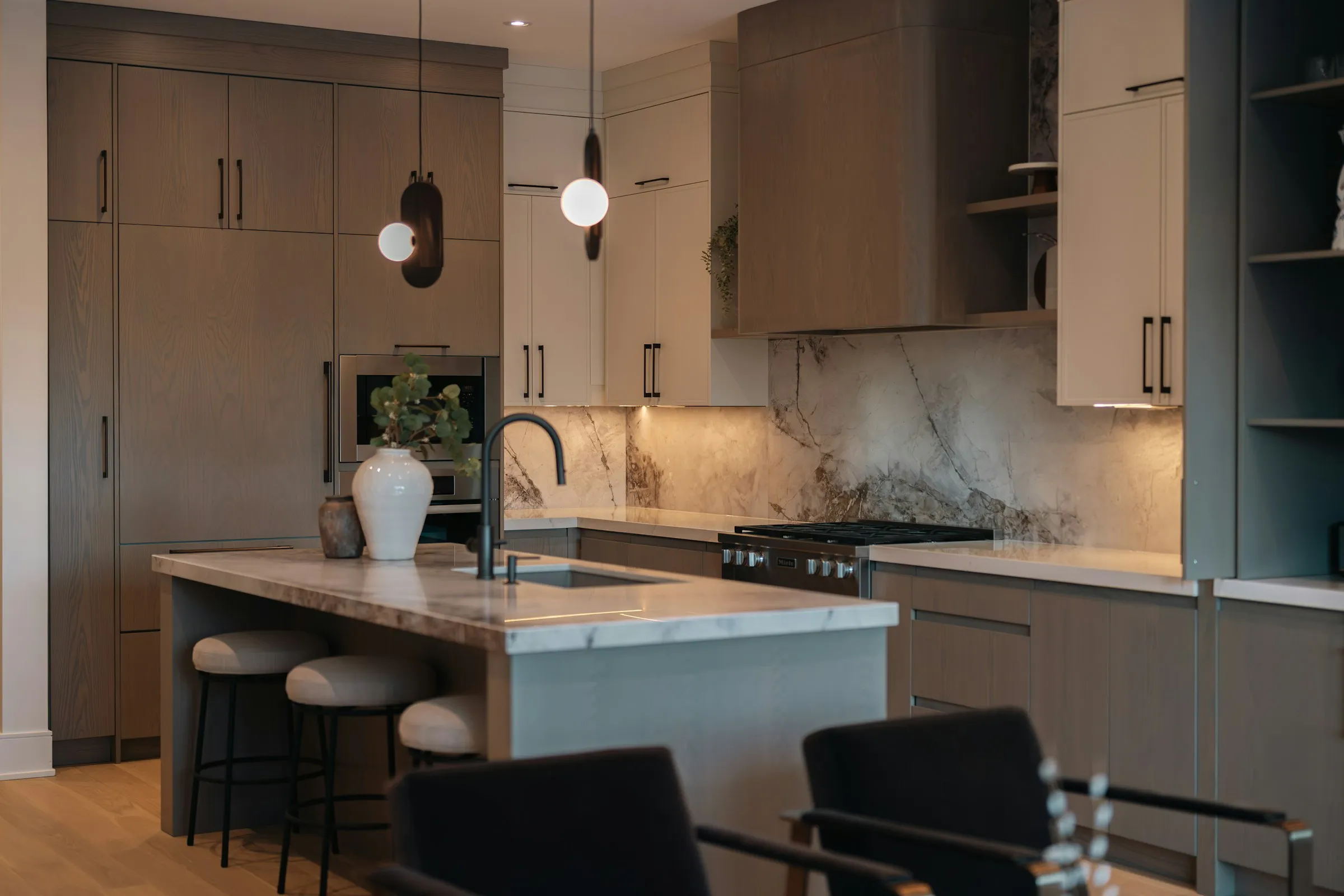
Granite remains the best countertop material for Indian kitchens. It is heat resistant, scratch resistant, stain resistant, and easy to clean. Black galaxy and brown antique are the most forgiving for daily use. Quartz is beautiful but less heat resistant — never place a hot vessel directly on quartz. Marble is stunning but requires significant maintenance and will stain with turmeric and oil over time — we generally advise against it for the main cooking counter. Compact laminates are a newer option that performs well and comes in a wide range of finishes, though not as heat resistant as stone.
Lighting Your Kitchen Properly
Most Indian kitchens are underlit. The standard single overhead light leaves the counter in shadow because your own body blocks it while you work. You need three layers of light in a kitchen. General lighting from the ceiling to illuminate the room. Task lighting under the overhead cabinets to illuminate the counter where you work. Accent lighting inside glass-front cabinets or on open shelves if you have them. Warm white LED strips under cabinets are inexpensive and transform how usable a kitchen feels in the evenings.
The One Thing Most People Regret
In ten years of designing kitchens in Pune, the single most common regret we hear is not planning enough storage. Homeowners always underestimate how much space they need for their kitchen items. Our advice: take your estimated storage requirement and add thirty percent. You will fill it. The second most common regret is choosing style over function — a beautiful handleless cabinet that is difficult to open with wet hands, or a glossy finish that shows every fingerprint. Design your kitchen to be used hard every day, and let the beauty come from good proportions and quality materials rather than decorative choices.
Design your kitchen to be used hard every day, and let the beauty come from good proportions and quality materials.